

AWH
20 Nov 2025
In 2025, Australia's energy storage market is exploding at an unprecedented pace, with Chinese manufacturers securing a flood of orders in this hot market.
At the recent All Energy 2025 exhibition in Melbourne, Australia, Chinese energy storage companies achieved significant success. Sungrow signed a 2026 strategic cooperation agreement with Raystech Group, committing to supply 800MW of inverters and 1GWh of energy storage systems to the Australian market within one year.

Meanwhile, EVE Energy has entered into a strategic partnership with Australian energy company EVO Power, committing to supply 2.2GWh of large-scale energy storage battery systems over the next five years.
This represents merely the tip of the iceberg for Chinese energy storage companies expanding into the Australian market. According to statistics from the CESA Energy Storage Application Branch's industry database, Chinese enterprises secured energy storage orders totaling nearly 50GWh in Australia from January to October 2025.
Policy-Driven: Hundred-Billion-Dollar Subsidies Ignite the Market
In 2025, driven by the accelerated retirement of coal-fired power plants, intensified government policies, and frequent significant fluctuations in electricity prices, Australia's energy storage market experienced an unprecedented surge. Policy initiatives and market mechanisms jointly formed the dual driving forces behind this wave of growth.

With Australia ranking among the world's leaders in per capita solar power generation, the federal government has set a target for renewable energy to account for 82% of electricity generation by 2030 and has outlined the development direction of the “National Battery Strategy.”
Data from the Australian Energy Market Operator (AEMO) shows that between July 2024 and June 2025, the National Electricity Market (NEM) added 3,116 MW/6,415 MWh of new battery storage capacity. In the second half of 2024 alone, NEM added 1,505 MW/2,989 MWh of new battery storage. In the first half of 2025, the NEM saw an additional 1,611 MW/3,426 MWh of battery storage capacity connected to the grid.

Additionally, in the first half of 2025, Western Australia also connected a 500MW/2000MWh battery energy storage project to the grid, with CATL supplying the DC-side equipment.
Overall, new battery storage capacity connected to the grid in Australia reached 2.111GW/5.426GWh in the first half of 2025. By June 2025, Australia's cumulative battery storage capacity exceeded 5GW/10GWh, with large-scale battery storage projects under construction totaling 9GW/25GWh.

As the proportion of renewable energy installations rapidly increases, negative electricity prices have become increasingly common across Australian states. In July 2025, the Australian government launched the “Cheaper Home Batteries” program—a residential energy storage subsidy initiative totaling 2.3 billion Australian dollars (approximately 10 billion RMB). Under this scheme, households installing home batteries can receive subsidies of up to 3,000 Australian dollars per unit. This policy immediately ignited the market. Government data revealed that within the first month of the subsidy program's implementation, Australia saw 19,600 new residential battery installations—a 2-3x surge compared to the same period the previous year. In just two months, Australia's residential battery installations nearly matched the entire 2024 annual total.
In August 2025, the Australian government further expanded its Capacity Investment Scheme (CIS), providing stronger support for renewable energy and energy storage projects. This expansion is projected to attract over 21 billion Australian dollars in investment within the energy storage sector by 2030.
Root Cause of the Surge: The Urgent Need for Energy Transition
The immense potential of Australia's energy storage market stems not only from current policy incentives but also from deep-seated demands within its energy structure.
It is understood that Australia boasts one of the world's most developed rooftop solar markets, with an average of one in every three homes equipped with a photovoltaic power generation system. In stark contrast, the storage adoption rate for residential solar systems in Australia stood at only about 6.5% by the first half of 2025. This significant imbalance indicates substantial room for market growth. Industry research reports project that by the end of 2025, Australia's new residential storage installations could reach 4GWh, potentially growing to 11GWh in 2026.
In large-scale energy storage, Australia's cumulative storage project capacity has reached 37 GWh, making it the world's third-largest market for large-scale battery storage, trailing only China and the United States. Overseas institutions forecast that Australia's energy storage capacity will reach 8.7 GWh by 2025 and is expected to climb to 43.6 GWh by 2030, demonstrating a significant compound annual growth rate.

AEMO data shows that in the second quarter of 2025, Australia's net energy arbitrage revenue surged significantly to $120.8 million, representing a year-on-year increase of $95.5 million (+377%) and accounting for 93% of total net revenue. Energy discharge revenue is projected to reach $148.1 million, up $107.6 million (+266%) year-on-year. Energy costs (charges above $0/MWh) increased by $13.3 million (+80%) to $29.8 million, while negative price charging revenue rose by $1.2 million (+84%) to $2.6 million.
In contrast, Frequency Control Ancillary Services (FCAS) revenue decreased from $15.9 million in Q2 2024 to $9.8 million (-39%), with its share of total net revenue falling from 39% in Q2 2024 to 7% in Q2 2025.
Regarding revenue models, prior to 2021, 80% of Australia's battery storage revenue originated from the Frequency Control Ancillary Services (FCAS) market, with the remainder derived from arbitrage in the energy market and negative price charging revenue. From 2023 to 2024, energy market revenue doubled. Since 2024, energy market revenues have significantly surpassed FCAS revenues, with net arbitrage income reaching record highs—exceeding FCAS revenues by more than double.

According to AEMO's 2024 Integrated System Plan (ISP) projections, Australia's National Electricity Market (NEM) will require 22GW/68GWh of non-pumped hydro storage capacity by 2029-2030, rising to 32GW/124GWh (excluding pumped hydro) by 2034-2035, and further increasing to 52GW/262GWh (excluding pumped hydro) by 2049-2050. Concurrently, energy storage will shift toward longer-duration applications, with battery storage systems providing less than 4 hours of duration gradually exiting the market after 2045.
Chinese Companies: Seizing the Initiative in Australia's Energy Storage Market
Facing the explosive growth of Australia's energy storage market, Chinese enterprises have demonstrated formidable market competitiveness, comprehensively expanding into this emerging sector from residential storage to large-scale projects.
At the All Energy 2025 exhibition, alongside Sungrow and EVE Energy, multiple Chinese energy storage companies announced collaborative plans in Australia. For instance, Haichen Energy Storage, Aton Energy, and Boda New Energy formed a three-way strategic partnership, aiming to jointly advance the implementation of no less than 10GWh of energy storage projects within the next three years. Maitian Energy signed strategic cooperation agreements with two major Australian renewable energy distributors, OSW and Solar Juice, with a combined project scale reaching up to 4GWh.
As early as August 2025, CATL reached an agreement with renewable energy developer ACEnergy to provide a total of 3GWh of battery systems and full-process integration services for three of its energy storage projects in Australia. Chinese manufacturers like Sige, Sungrow, and GoodWe are also actively expanding in the Australian market.
Furthermore, Chinese companies are accelerating their localized expansion. For instance, EVE Energy has initiated the establishment of its Australian subsidiary and is building a comprehensive service system encompassing sales, pre-sales, and local third-party after-sales partners.
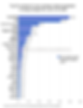
According to incomplete statistics from the CESA Energy Storage Application Branch's industry database, from January to October 2025, Chinese companies secured new overseas energy storage orders/partnerships totaling 267GWh—already surpassing last year's full-year figure and representing a 145.6% year-on-year increase.
Among these, orders/partnerships with Europe accounted for the largest share at 55GWh (20.6%). Australia followed with 49.2GWh (18.4%). The United States accounted for 40.9 GWh (15.3%), the Middle East for 40.06 GWh (15.0%), Latin America for 13.855 GWh (5.2%), India for 13.2 GWh (5.0%), Japan for 8.4 GWh (3.1%), and Southeast Asia for 4.75 GWh (1.8%).
Competitive Advantages: Technology, Service, and Solutions
The success of Chinese energy storage companies in the Australian market stems not only from competitive pricing but also from their technological prowess, service capabilities, and comprehensive solutions.
It is understood that Australian customers typically focus on three core questions when selecting energy storage products: “First, what is your warranty like? Second, do you have a local team? Third, do you have inventory?” This indicates that price is no longer the sole deciding factor in the Australian market, with Chinese companies' technological strength and service capabilities emerging as key competitive advantages.
Clearly, in Australia's energy storage market, quality and reliability are the true gateways to success.
Australia's subsidy policies inherently set technical thresholds, requiring products to pass the Australian CEC certification and possess VPP (Virtual Power Plant) functionality. This reflects that the Australian government is not only promoting energy storage equipment but also preparing for the future dispatch of the entire new energy system.
In complex Australian projects like microgrids and large-scale energy storage plants, the technical capabilities and engineering experience of Chinese energy storage companies have become pivotal to winning market share. Increasingly, Chinese enterprises are transitioning from pure manufacturing to integrated service systems encompassing equipment, solutions, and operations & maintenance (O&M). Their Australian strategy is evolving from simple product exports to comprehensive competition based on technology, brand, and management systems.
Localized Operations: Chinese Enterprises Still Need to Deepen Their Commitment
While Australia's energy storage capacity is growing rapidly, it also faces practical challenges: grid congestion is worsening in some regions, leading to longer grid connection cycles and rising costs; energy storage business models require further development to ensure long-term project viability.
Moreover, Australia's vast and sparsely populated landscape poses significant challenges for service deployment by energy storage companies. Facing Australia's unique geography and market conditions, Chinese companies are shifting from simple product exports toward deep localization efforts.
Additionally, Australia enforces strict regulations on working hours and safety standards. Field workers are limited to a maximum of 10 hours per day, and after 10 hours of work, they must rest for at least 12 hours before resuming duties. This contrasts sharply with China's culture of “constant WeChat communication and overnight rush jobs.”
Simultaneously, Australia's energy storage sector grapples with a talent shortage. As a multidisciplinary field, no existing university program perfectly aligns with the industry's specialized needs. Therefore, deepening localization efforts by Chinese companies is not only essential for market expansion but also a necessary step to integrate into Australia's energy transition process.
Over the next five years, Australia will advance toward its 2030 target of 82% renewable energy. With multiple coal-fired power plants being phased out and new electricity demands emerging from AI data centers, the urgency for energy storage deployment in the Australian market will intensify. Additionally, AEMO forecasts that achieving net-zero targets will require deploying at least 49GW of energy storage capacity by 2050.
Driven by both policy and market forces, Australia's energy storage market has entered a golden era of development.